
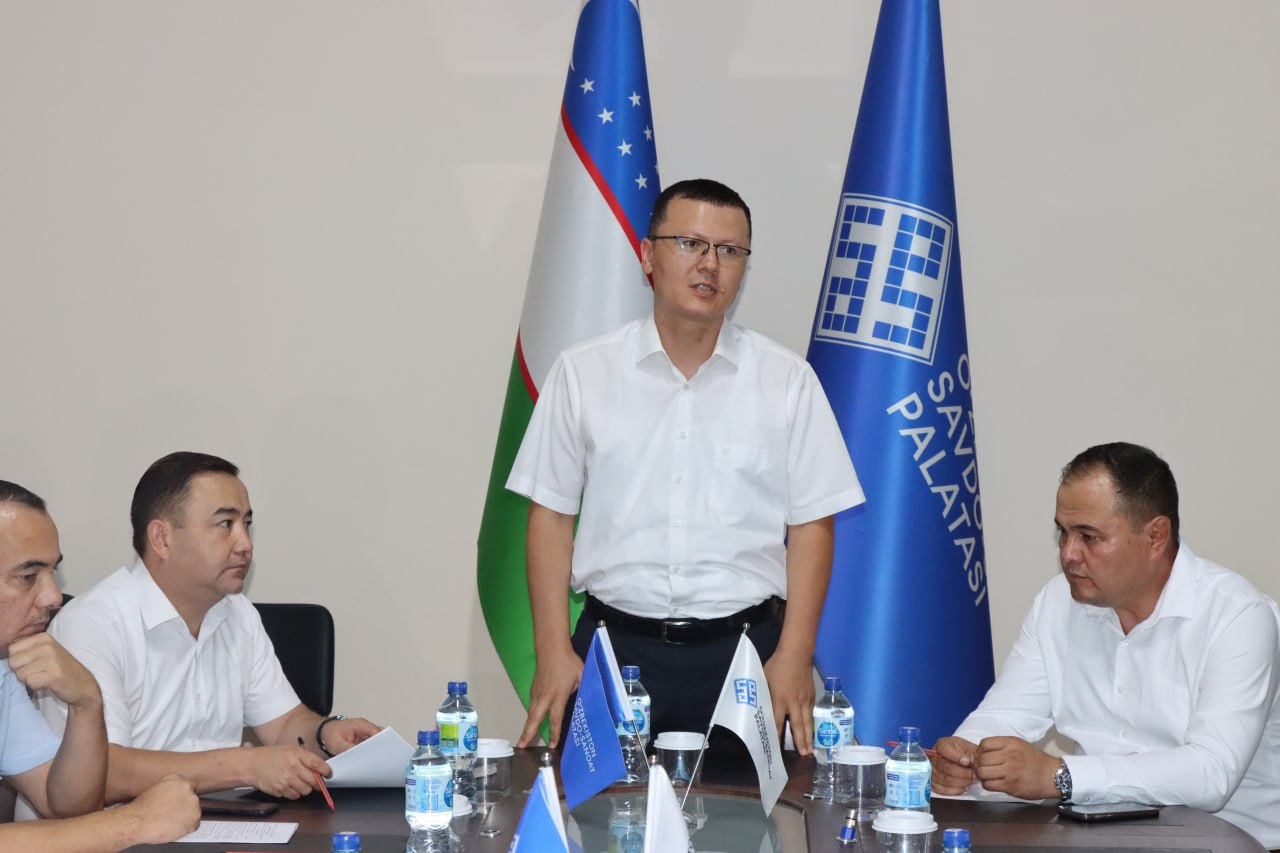
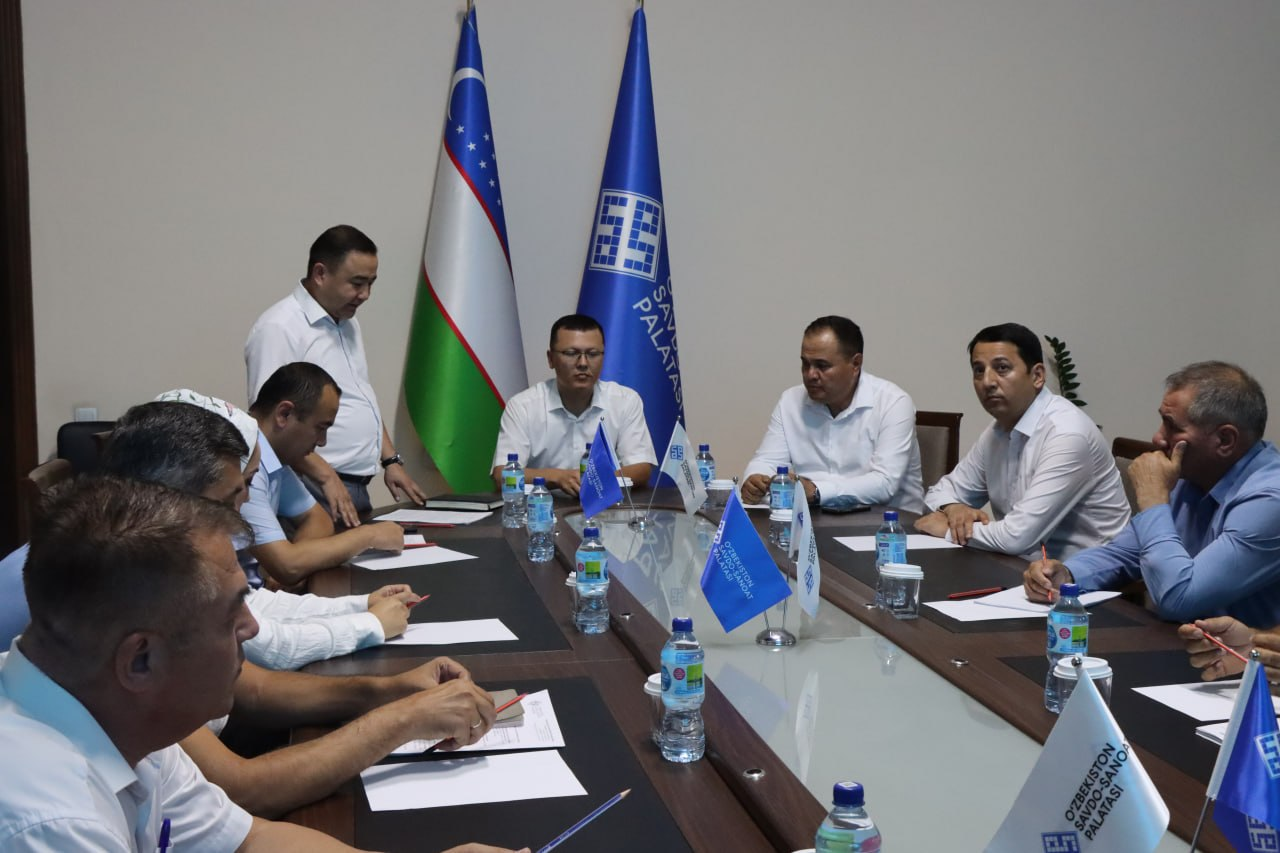
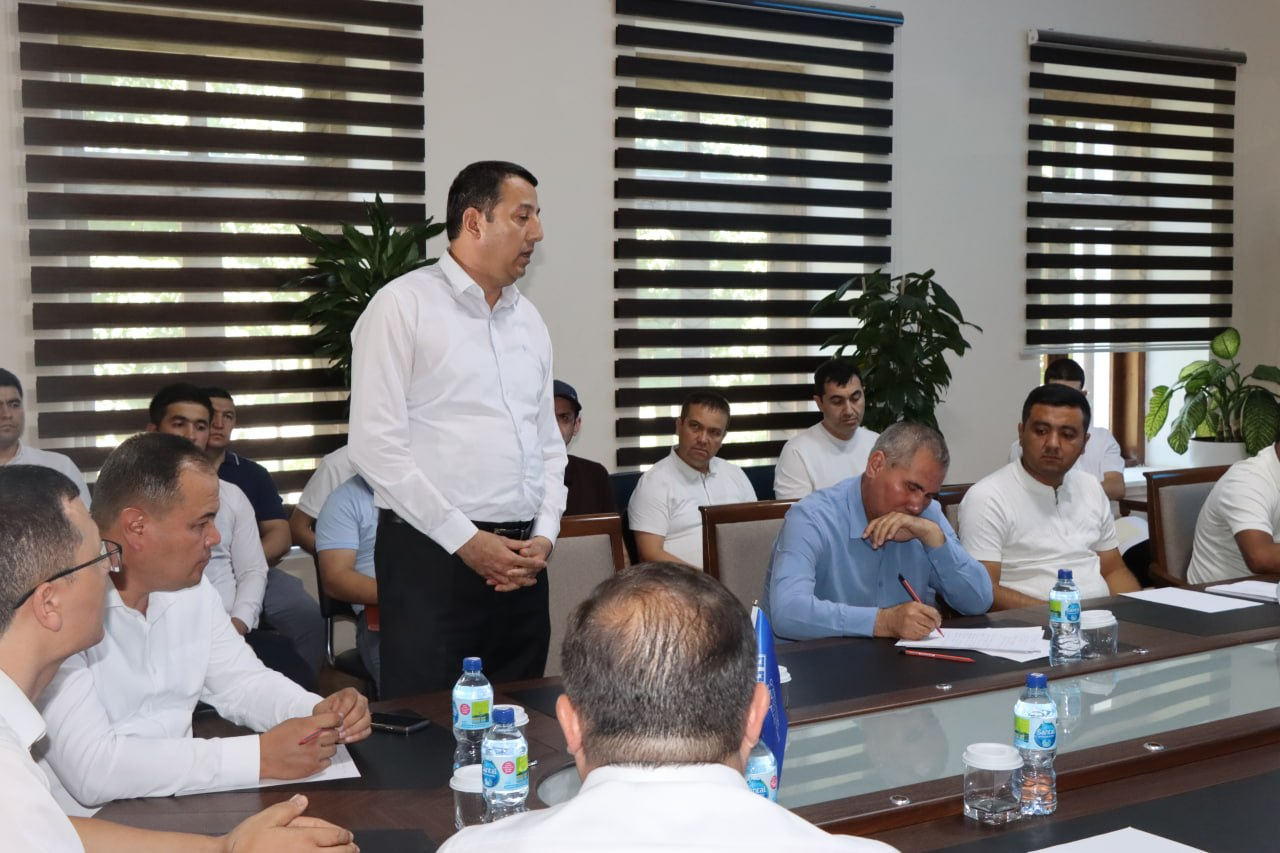
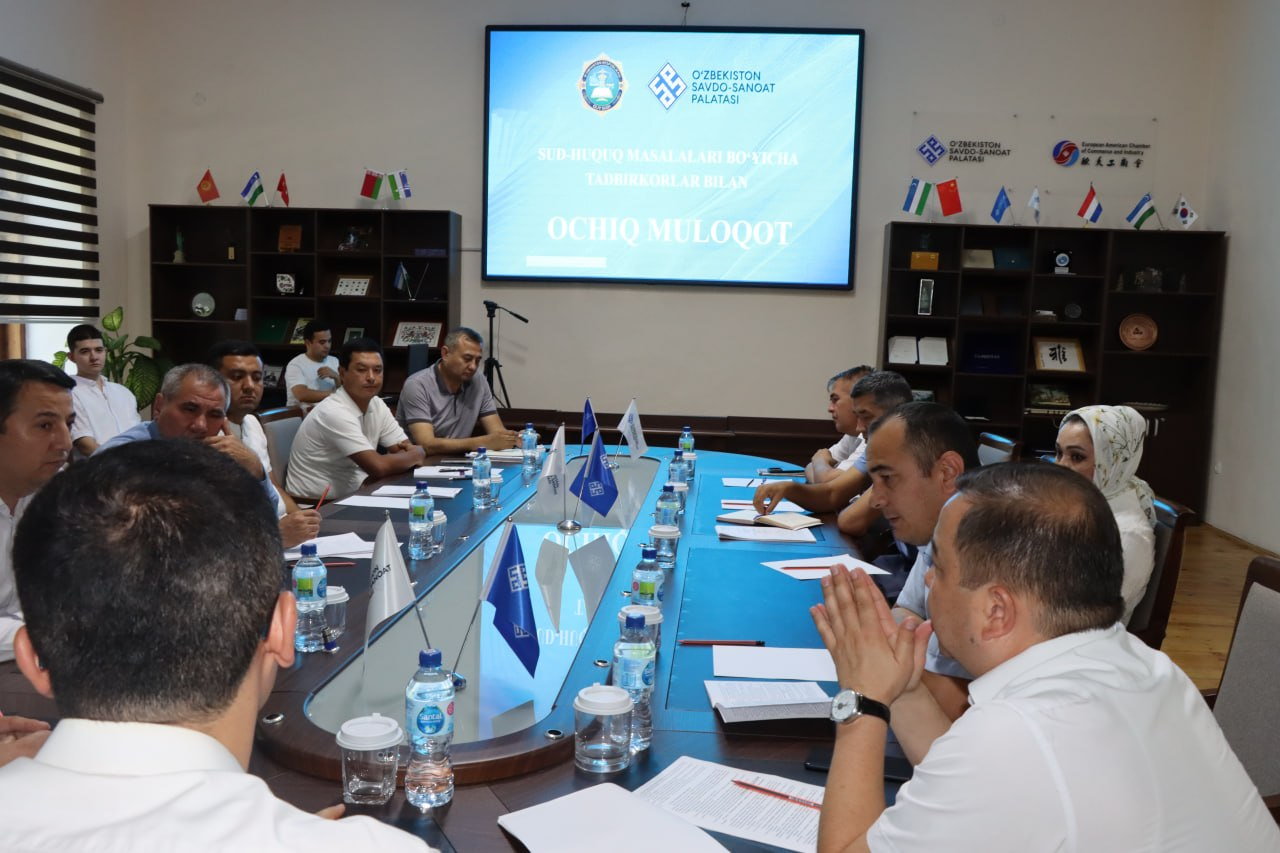
On July 15, 2026, a roundtable discussion was held at the Samarkand Regional Department of the Chamber of Commerce and Industry of the Republic of Uzbekistan. The event focused on economic court practice, the legal foundations of mediation, the use of settlement agreements in court proceedings, the quality of claims submitted to economic courts, and recent legislative developments in the field of anti-corruption.
The event brought together judges of the Judicial Panel for Economic Cases of the Samarkand Regional Court, representatives of the Interdistrict Economic Court of Samarkand Region, legal advisers of commercial banks, and legal service employees of organizations that are members of the Chamber of Commerce and Industry.
Participants received detailed information on the Law of the Republic of Uzbekistan “On Mediation.” It was noted that the law regulates mediation-related relations and establishes the legal framework for applying mediation in disputes arising from civil, business, banking, insurance, labor, and family legal relations.
It was emphasized that mediation is based on the principles of confidentiality, voluntariness, cooperation and equality of the parties, as well as the independence and impartiality of the mediator. Mediation may only be applied when all parties voluntarily agree to participate, and each party has the right to withdraw from the process at any stage.
The discussion also covered the rights and obligations of mediation participants, the procedure for training mediators, and the requirements for conducting mediation activities. It was noted that mediation services may be provided by individuals with higher education who have completed specialized training, successfully passed the qualification examination, and have been included in the Register of Mediators.
Special attention was given to the importance of resolving disputes through settlement agreements and mediation agreements within economic court proceedings. According to current economic procedural legislation, courts assist parties in reaching mutually acceptable agreements and encourage peaceful dispute resolution.
Under the law, parties may resolve disputes through settlement agreements or mediation agreements. Settlement agreements may be concluded at any stage of court proceedings, including the enforcement stage. Mediation agreements may be concluded before a judgment is issued by the court of first instance.
The participants also discussed the quality of claims submitted to economic courts. It was noted that in some cases claims lack sufficient legal justification, calculations, or supporting evidence. Recommendations were provided on preparing procedural documents in full compliance with legal requirements.
A separate session was devoted to the Law of the Republic of Uzbekistan adopted on June 23, 2026, aimed at increasing the effectiveness of anti-corruption measures and ensuring the inevitability of liability for corruption-related offenses.
The participants were informed about key innovations introduced by the law, including the establishment of an electronic register of persons convicted of corruption-related crimes, the strengthening of the legal framework of the National Anti-Corruption Council, the expansion of the powers of the Anti-Corruption Agency, and the enhancement of compliance and internal control systems within state bodies and organizations.
In addition, information was provided on new mechanisms for assessing corruption risks, preventing conflicts of interest, identifying corruption-prone positions, and improving oversight in the field of public procurement.
At the conclusion of the event, experts answered participants’ questions and exchanged views and proposals on addressing existing challenges, promoting the effective use of mediation mechanisms, and further strengthening cooperation with economic courts.
Press Service of SamDavaktiv